Tech & ScienceFebruary 2, 2026
Quantum Scaling Breakthrough: Stanford Scientists Build Tiny 'Light Traps'
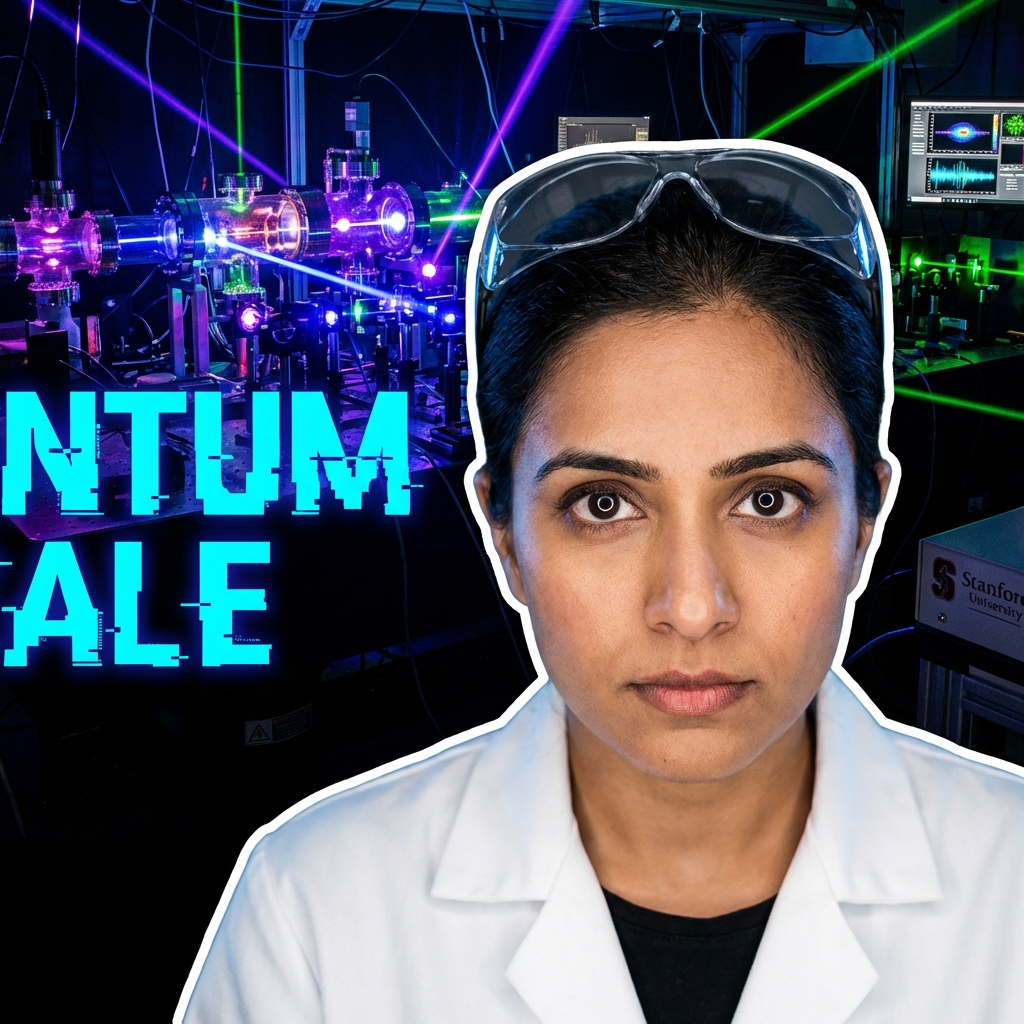
Researchers at Stanford University have achieved a significant milestone in quantum computing by developing miniature 'light traps' that could finally allow quantum processors to scale into the millions of qubits.
Key Update
* The Tech: Miniature optical cavities that capture light from individual atoms.
* The Break: Enables reading hundreds of qubits simultaneously in a compact array.
* Status: Working prototypes demonstrated with dozen-qubit arrays.
Details
The new light-based breakthrough involves miniature optical cavities that efficiently collect light from individual atoms, allowing for the simultaneous reading of many qubits. The team has already demonstrated working arrays with dozens to hundreds of cavities, suggesting a potential path to quantum networks with millions of qubits.
Background
Scaling quantum computers has historically been limited by the physical space required to 'read' the state of each qubit. Standard lasers and detectors are too bulky for high-density chips. By shrinking the trap itself to a microscopic level, Stanford scientists have solved one of the biggest 'real estate' problems in quantum physics.
Impact
* Quantum Networks: Could lead to the first practical, high-speed quantum internet.
* Processing Power: Millions of qubits would allow for unbreakable encryption and room-temperature superconductors.
* Commercialization: Moves quantum computing from experimental labs toward industrial mass production.
Enjoy this story?
Please review our free news & stories on Trustpilot.